We Tested Our Suits in Bangkok's Heat — Here's What Happened
We Tested Our Suits in Bangkok's Heat — Here's What Happened

Table of Contents
- Why We Put Our Suits to the Test
- The Test Route: Talat Noi at Midday
- The Expectation vs. Reality
- The Science Behind Heat-Resistant Tailoring
- Frequently Asked Questions
1. Why We Put Our Suits to the Test
Bangkok heat is unforgiving. With average daily temperatures soaring past 35°C alongside high humidity, most men assume wearing a tailored suit means sacrificing comfort for style.
We hear it all the time from visitors and locals alike: "Is it even possible to wear a suit here without sweating through it in five minutes?"
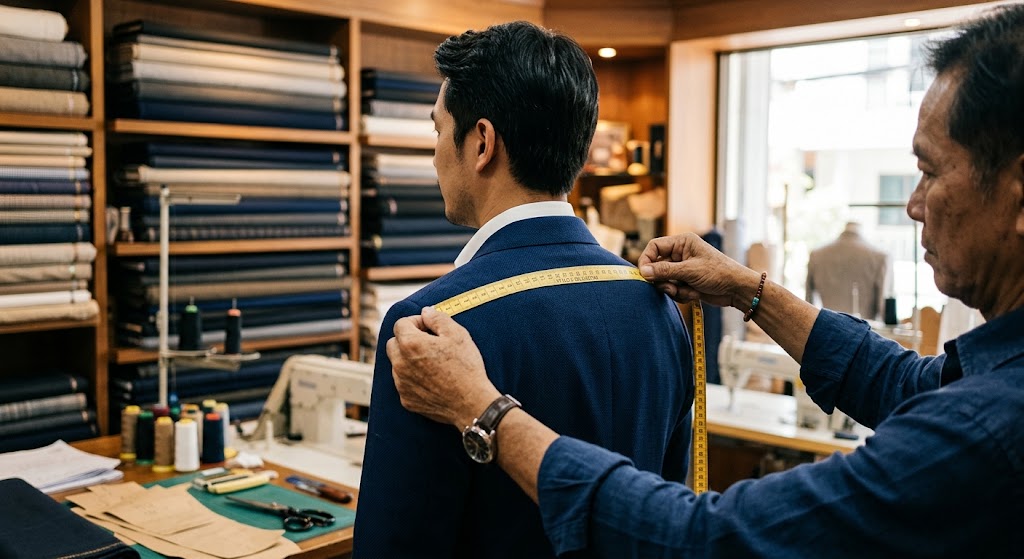
Instead of just telling our clients that our lightweight garments handle the tropical climate, we decided to prove it with a real-world stress test.
Key Takeaway: Looking sharp in tropical weather isn't about enduring heat—it's about smart construction and climate-adapted tailoring.
2. The Test Route: Talat Noi at Midday
We deliberately picked a challenging venue: Talat Noi, one of Bangkok's oldest riverfront neighborhoods.
- The Conditions: Midday sun, 35°C heat, zero air conditioning, high humidity.
- The Route: Narrow alleys, open-air markets, metal scrap yards, and exposed river walks.
- The Gear: A fully structured, double-breasted bespoke linen-blend suit worn continuously without indoor breaks.
This wasn't a two-minute photo shoot in front of an air-conditioned cafe—it was a full-afternoon walk designed to test breathability, sweat resistance, and shape retention.
3. The Expectation vs. Reality
Close-up of the breathable linen fabric weave under natural sunlight.
[AI IMAGE PROMPT: "A photorealistic macro shot of lightweight linen suit fabric texture, soft natural light, shallow depth of field, showing the weave detail, matching Stylo's Collection's editorial fabric photography."]
Metric
Common Expectation
Actual Result
Wrinkling
Severe creasing and lost structure
Clean drape maintained throughout the walk
Sweat Marks
Visible moisture pooling on back/chest
Zero bleed-through on the exterior jacket
Airflow
Heavy, trap-like heat retention
Continuous ventilation while moving
The suit held its shape from start to finish. There was no severe sagging, no dark moisture patches on the exterior, and no need to ditch the jacket halfway through the route.
4. The Science Behind Heat-Resistant Tailoring
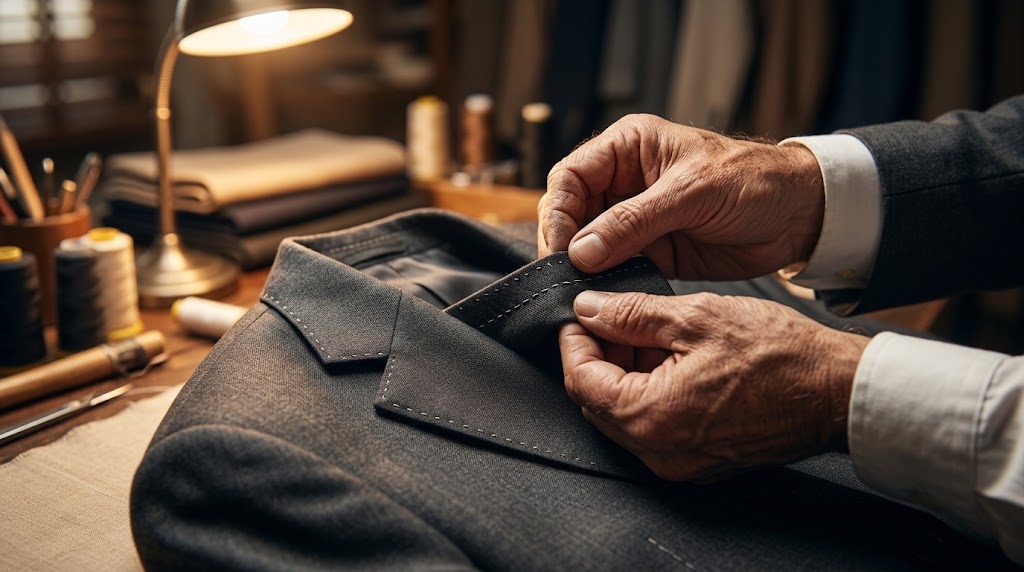
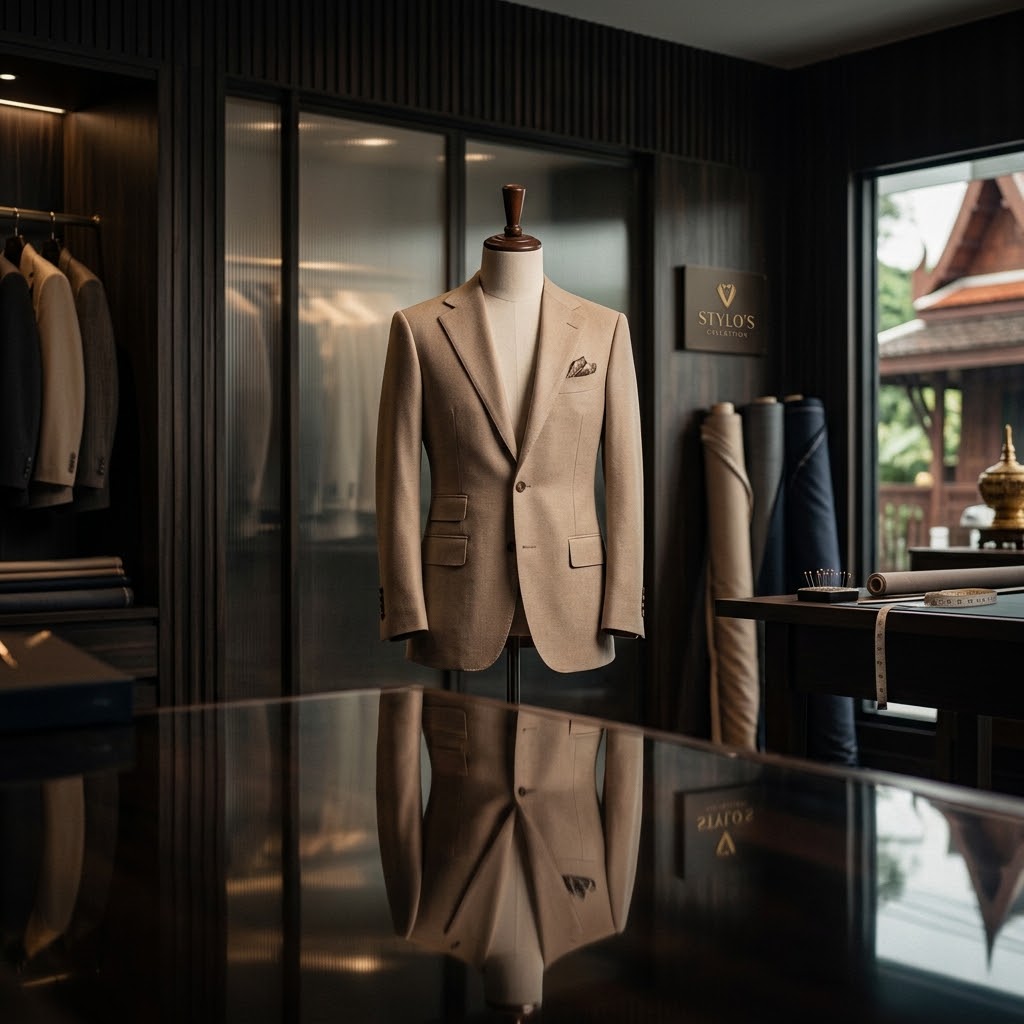
A finished summer suit jacket displayed in the workshop.

Our test suit succeeded because of three deliberate design choices:
🧵 Open-Weave Breathability
We selected a specialized linen-cotton blend. Pure linen wrinkles instantly, but blending it retains high air permeability while maintaining structural stability.
✂️ Unlined & Half-Canvas Construction
Standard suits rely on heavy polyester or silk linings that turn the jacket into a greenhouse. By utilizing a half-canvas or unlined structure, air passes straight through the weave, letting heat escape naturally.
📐 Ergonomic Armholes
High-cut bespoke armholes keep the jacket body close to your frame without dragging fabric against your skin, allowing cooler air to circulate with every stride.
Frequently Asked Questions
Can a suit really stay comfortable in Bangkok heat?
Yes. When constructed with open-weave fabrics (like linen or high-twist tropical wool) and minimal internal chest canvas, a bespoke suit remains cool and breathable even in humid weather.
What fabric is best for Bangkok's climate?
Linen blends, tropical-weight worsted wool (such as Fresco), and linen-silk mixtures offer the best combination of breathability, wrinkle resistance, and drape.
Does a lighter fabric mean lower quality?
No. Tropical-weight cloth is intentionally engineered with open weaves and fine yarns to regulate body temperature without compromising durability or elegant drape.
How was this heat test conducted?
A model wore our bespoke linen blend suit through the exposed streets of Talat Noi during peak afternoon heat without taking breaks in air-conditioned spaces.
Ready for Suits Tailored for the Tropics?
Experience lightweight bespoke tailoring crafted for Bangkok's climate. Visit our workshop for a custom fitting and feel our tropical-weight fabrics in person.
📍 Location: Phrom Phong, Sukhumvit, Bangkok
💬 Direct WhatsApp: +66 86 338 8762