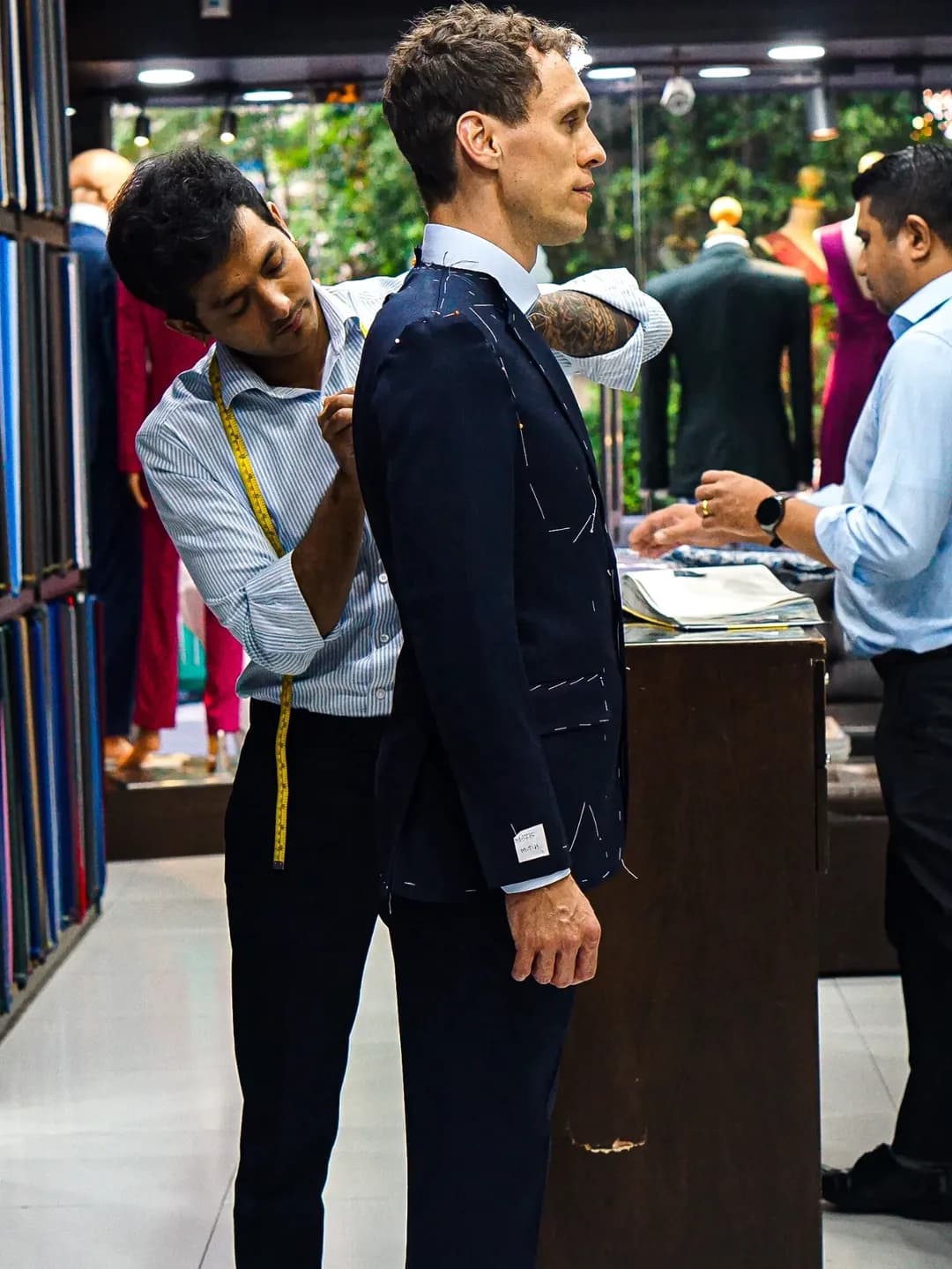
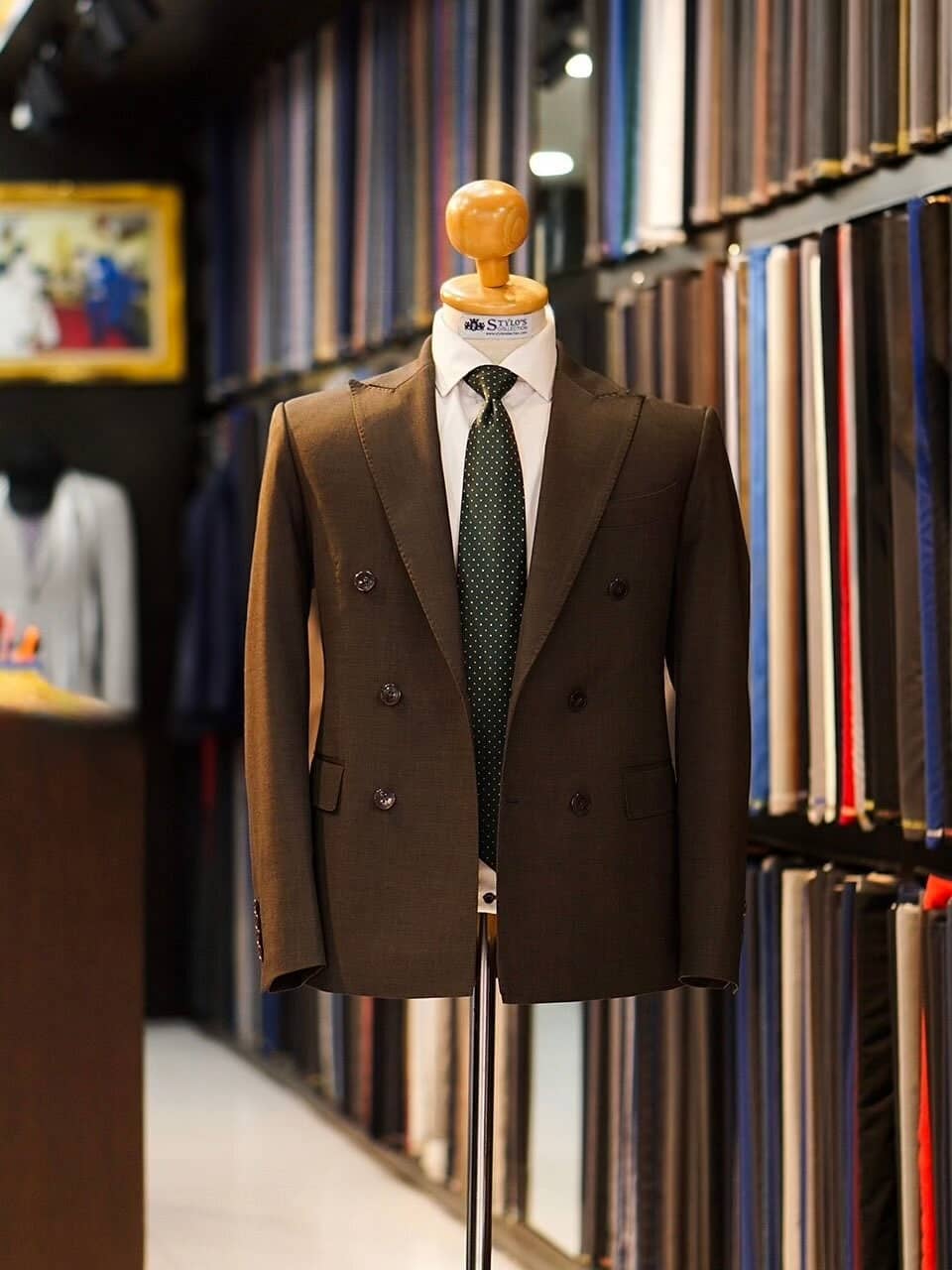
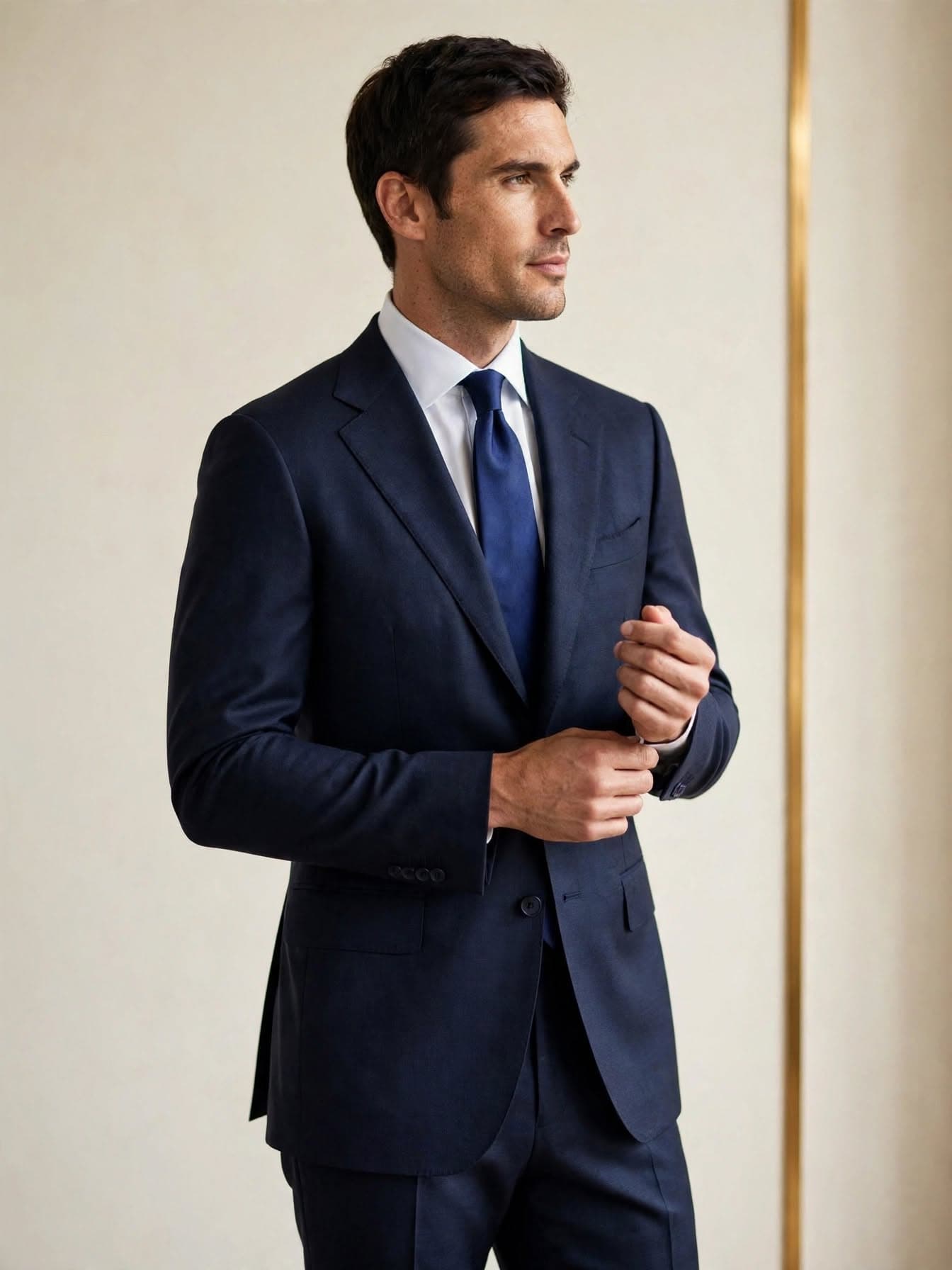
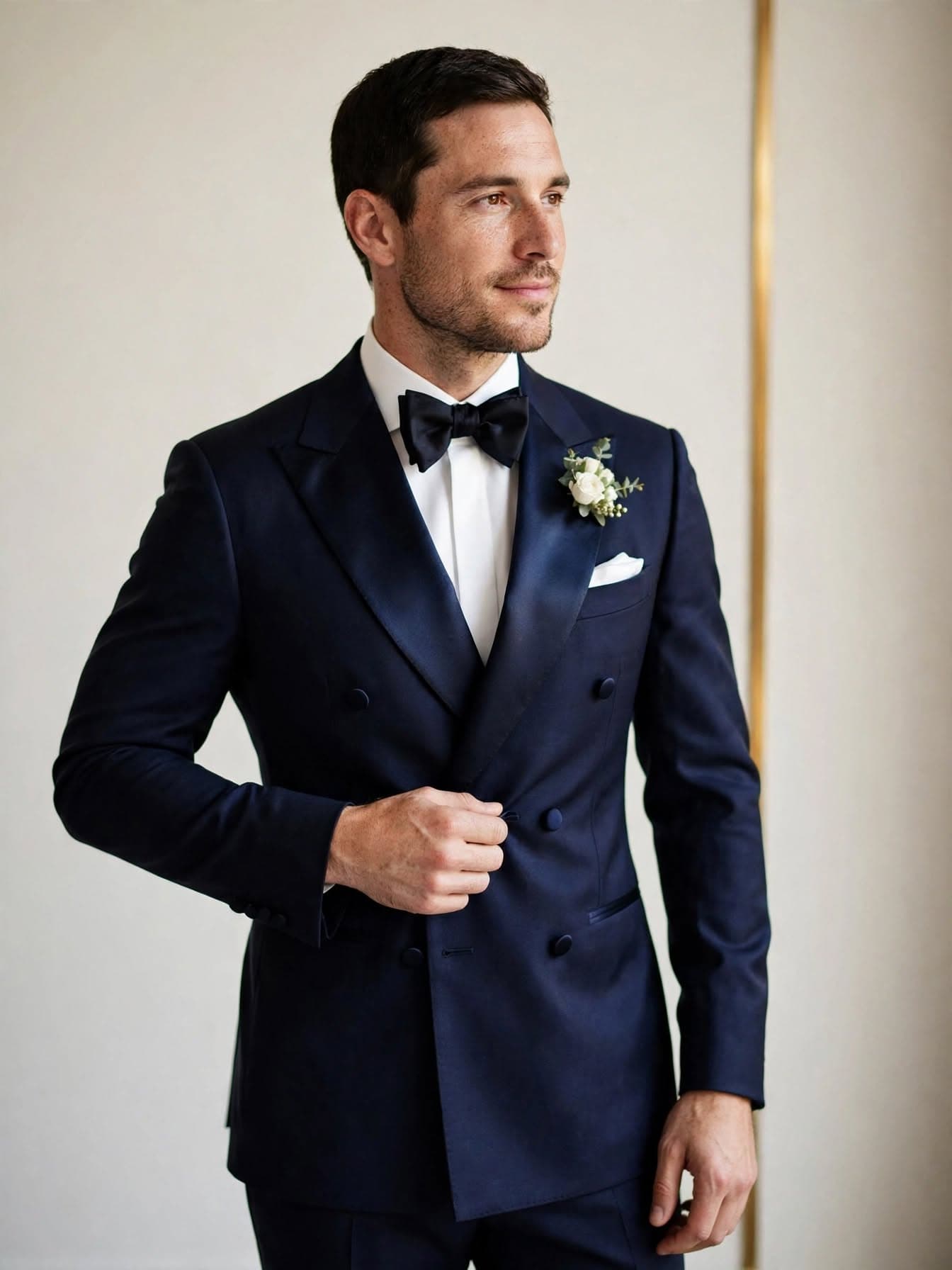
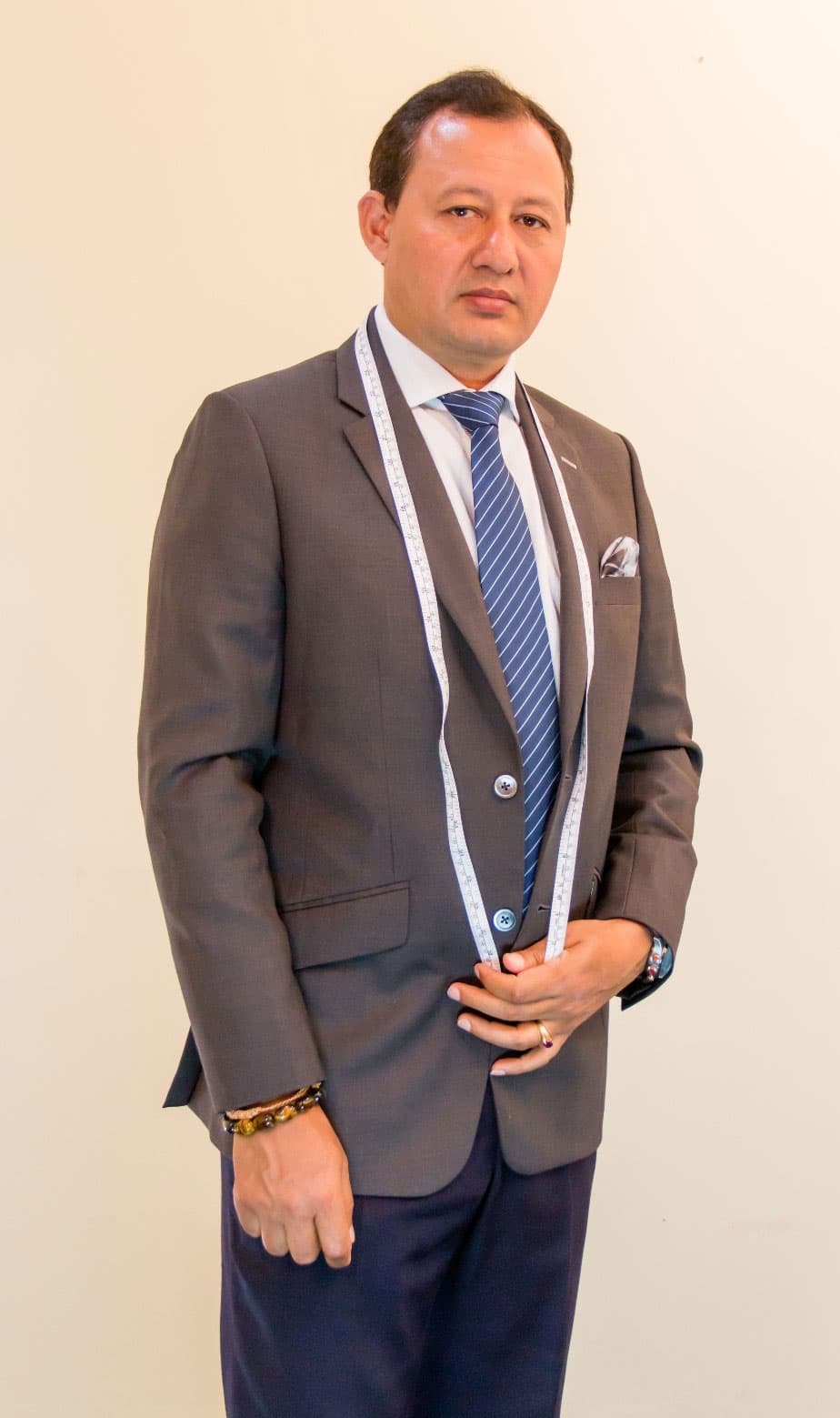
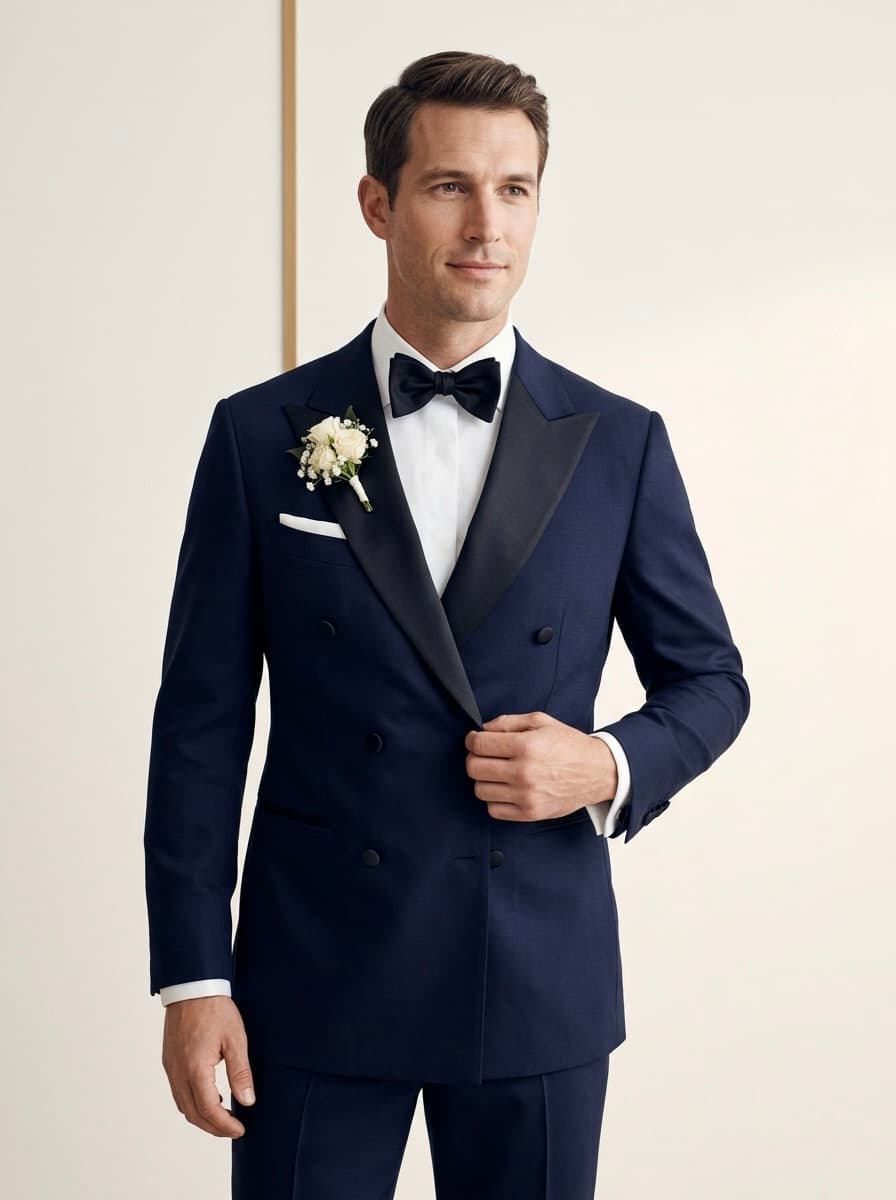
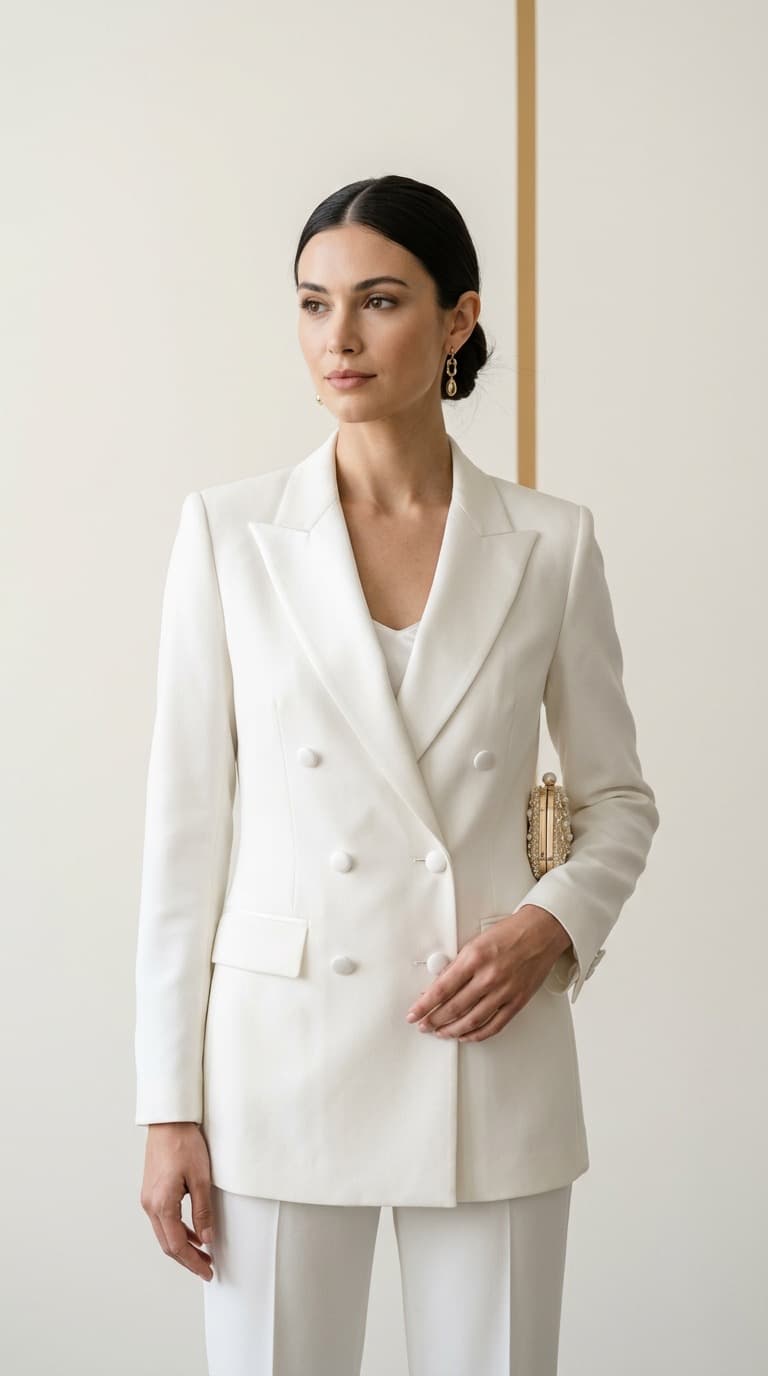
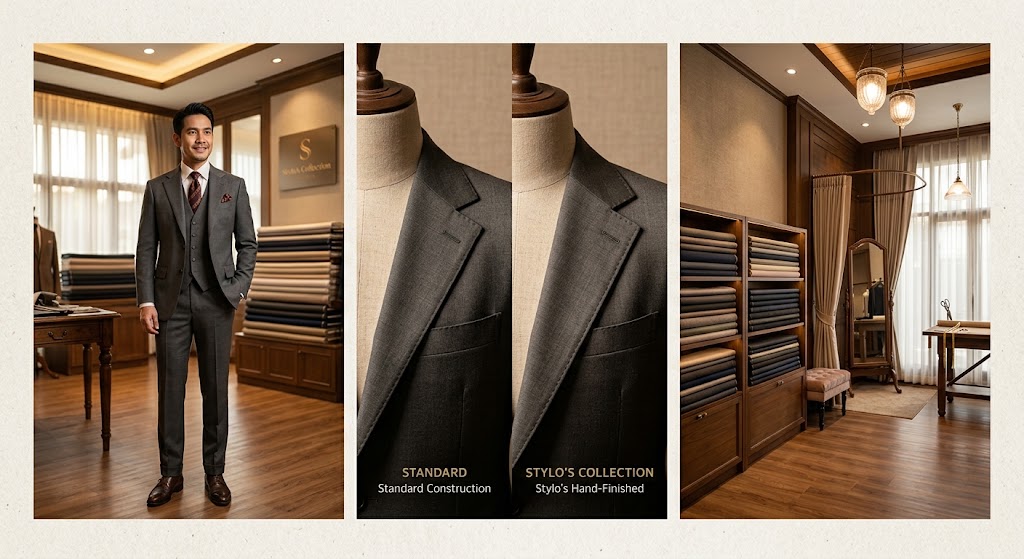
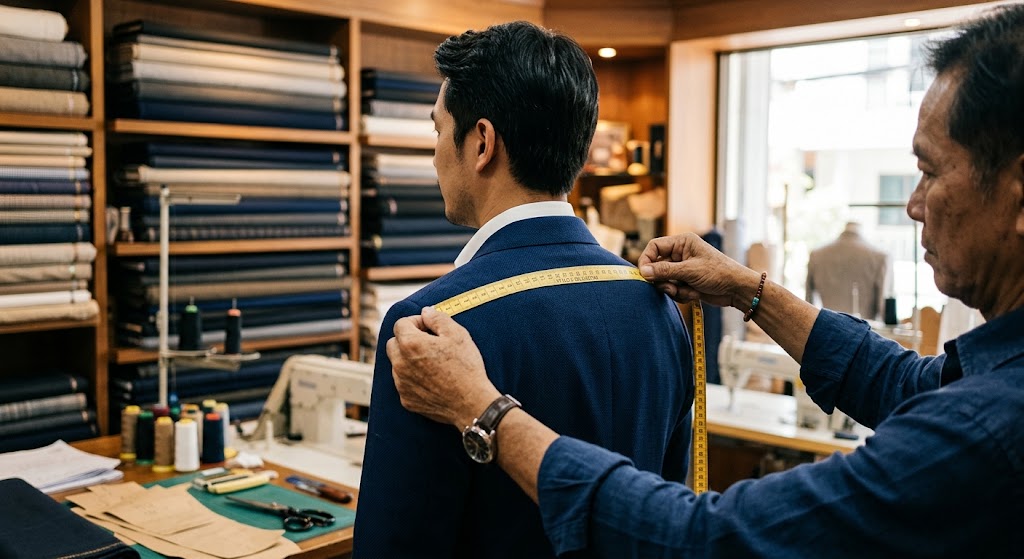
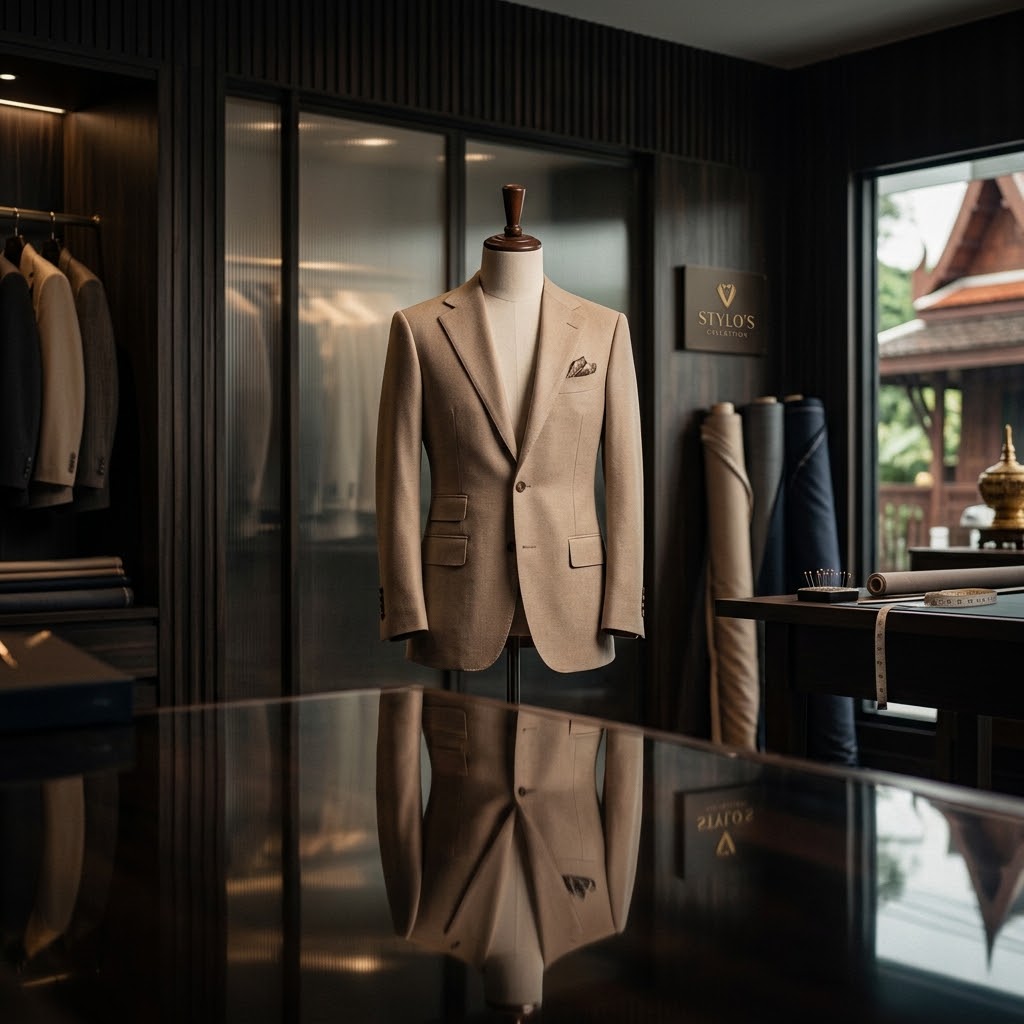
A master tailor's work is defined by precision and care. First, the shoulders must sit naturally, with the seam ending exactly where your arm meets your shoulder bone—this is nearly impossible to fix once fabric is cut. Second, there should be no visible collar gap; the jacket collar should hug your shirt collar seamlessly when you move. Third, the lapel should lie flat with a gentle roll, curving smoothly rather than creasing like cardboard.
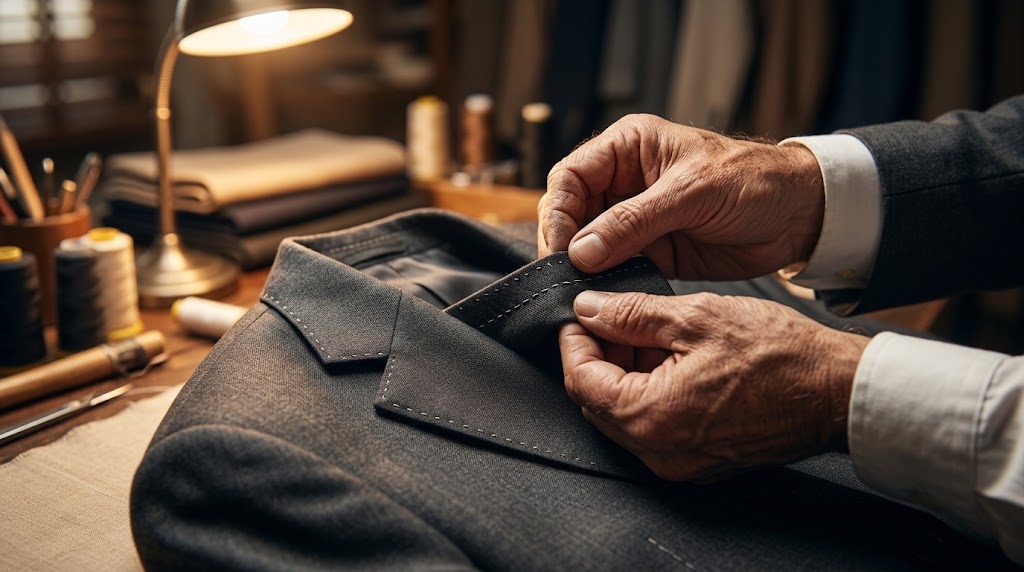
Fourth, the jacket must balance from every angle—front, side, and back—with no pulling or diagonal wrinkles. Fifth, sleeves should hang clean without twisting, achieved by measuring your natural arm pitch. Sixth, the finishing must be immaculate: horn or shell buttons, hand-cut buttonholes, and matching pattern lines.
Beyond construction, a master tailor asks about your lifestyle before touching the tape—how and where you'll wear the suit—to determine fabric weight and structure. They also explain fabric trade-offs honestly, rather than pushing expensive, impractical cloth. Finally, they refuse to rush your fitting, spending 30–45 minutes assessing posture and movement.
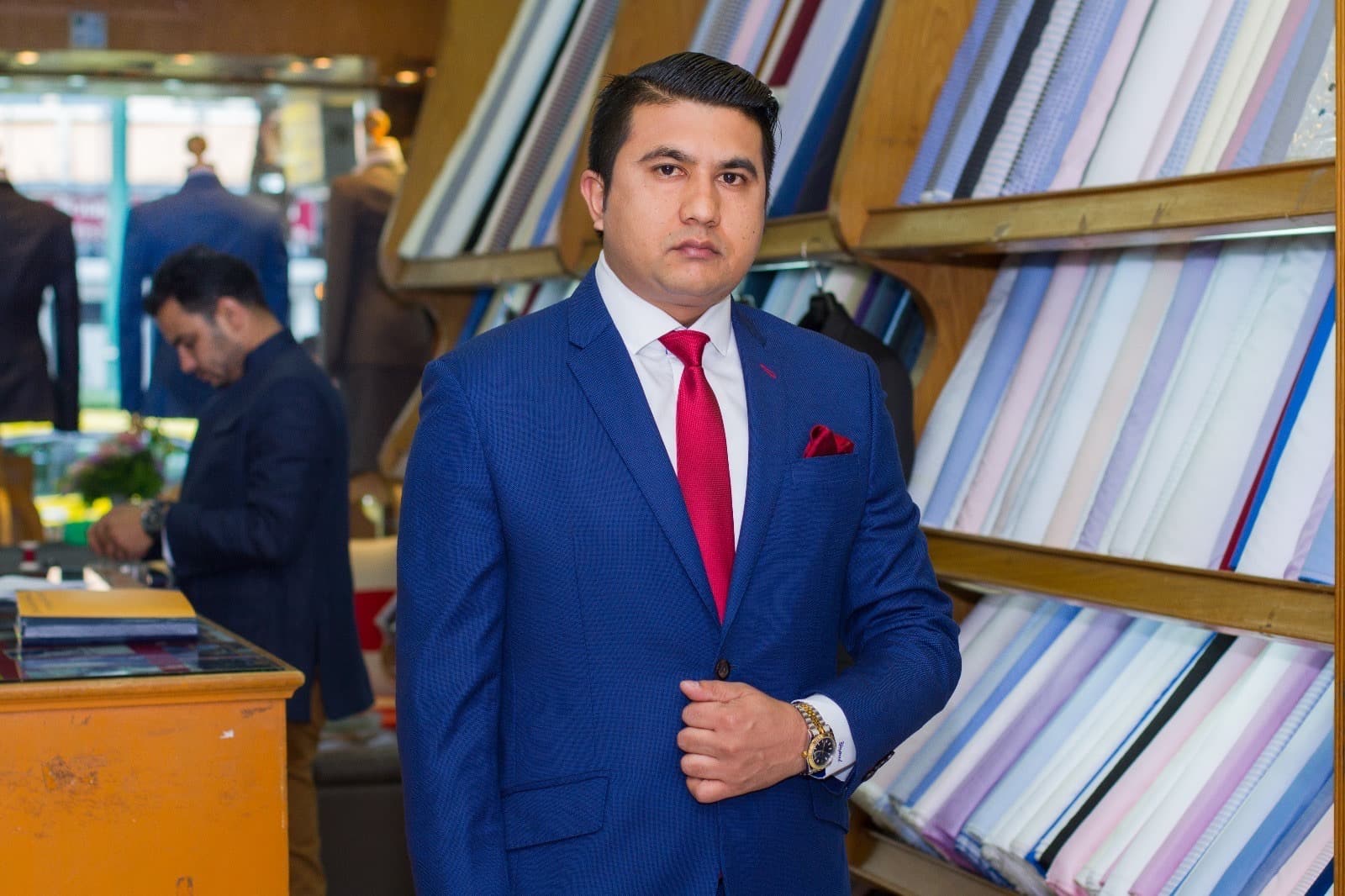
Key takeaways: A well-made suit shows clean shoulders, a flush collar, a smooth lapel roll, and precise stitching. The biggest red flag is a rushed fitting with no questions and no mid-way adjustment. Expensive fabric alone doesn't guarantee quality—construction and pattern cutting matter far more. For true craftsmanship in Bangkok, visit Stylo's Collection in Phrom Phong, Sukhumvit, or WhatsApp +66 86 338 8762.
Read article: 9 Signs Your Tailor Actually Knows What They're Doing